
AI PROMPT · 129
肯尼迪演讲动态排版影片
创建一个时长为20.00秒、标题为“ESCAPE THE ORBIT”(逃离轨道)的动态排版影片,基于约翰·F·肯尼迪于1962年9月12日在莱斯大学的演讲。 核心体验:一个句子发现它可以改变自己的轨迹。 交付一个完整的、自包含的HTML文件。构图:1080×1080。目标帧率:60fps。使用Canvas、SVG或嵌入式WebGL。嵌入所需的资产和库。影片必须在没有音频的情况下工作。 确切显示文本 “We choose to go to the moon” “[…]” “not because they are easy,” “but because they are hard” 保持此顺序。方括号中的省略号明确指示省略的演讲内容。署名与摘录分开。无额外标语。 艺术指导 背景色:午夜蓝 #080D23。 主要字体颜色:暖白色 #FFF4DD。 轨迹颜色:电光珊瑚色 #FF654F。 次要轨道几何颜色:蓝色 #6685FF。 对演讲部分使用宽大、自信的无衬线字体,对最后一个强调词使用锐利的斜体。避免太空船仪表盘的外观。不要出现火箭、宇航员插图、星空壁纸、镜头光晕或装饰性遥测数据。 画面应看起来像一件变得富有表现力的极其精致的天文仪器。 中央视觉规则 句子的基线是一条轨迹。 起初它被困在一个封闭的轨道中。一个修辞决定将该轨道变为开放路径。字母始终是相同的旅行者。 使用抽象的轨道隐喻;不要展示虚构的任务数据或暗示物理上准确的飞行模拟。 分镜脚本 0.00–3.50 开场摘录出现在中心位置,大而水平。以三个有意义的短语组揭示它。 一条单发丝般的椭圆穿过基线后方。一个小圆形月球标记占据其远焦点。 将完成的短语静止保持700毫秒。 3.50–6.00 摄像机拉远。之前直的基线显示出浅曲率。 短语作为一个连贯单元沿椭圆移动。在初始运动期间保持其字形直立。只有在阅读停顿后,它们才可以逐渐采用路径的切线方向。 观众意识到句子是在绕圈而不是前进。 6.00–7.00 在未受干扰的中心开口处显示方括号省略。轨道运动减速。 7.00–10.50 在轨道的近侧揭示下一个从句。其最后一个词通过一个平滑、毫不费力的弧线移动并返回到开始的地方。 这种轻松感应该感觉优雅但无成效。避免滑稽的弹跳。 10.50–14.50 在变形之前水平揭示最终从句。 在其强调处,椭圆在一个精确点打开。相同的跟踪字母组采用新的切线并离开。 执行一次故意的70度摄像机滚动。反向旋转活动短语,使其在轨道场围绕其改变方向时保持可读。 轨迹从左下扫向右上。加速度通过其后部标记之间间距的扩大来传达,而不是通过摇晃摄像机。 14.50–17.00 摄像机匹配离开短语的速度。短语在视觉上静止,而旧轨道在其下方退去。 月球标记通过几何重叠放大为一个克制的新月形。新月形框住目的地而不变成卡通插图。 17.00–20.00 解析为一个宽敞的编辑构图,包含按阅读顺序选择的摘录,包括其省略标记。 开放轨迹穿过页边距并退出画面。最后1.2秒完全静止地保持整个图像。 编舞 仅使用三种摄像机操作:拉远、滚动、速度匹配。 给每个操作一个修辞目的。 在1080px构图中保持当前阅读的短语至少64px高。 运动模糊可能影响尾部几何图形,绝不能影响活动文本。 任何单词不得在阅读停顿结束前开始其装饰性旅行。 实现 分析性地表示椭圆和离开路径。在离开点连续混合位置和切线;无瞬移。 使用弧长采样以保持曲线上的间距一致。 分离摄像机变换与字形方向。 缓存字形渲染和静态几何图形。 暴露window.ready和window.seek(t)。Seeking必须暂停播放并确定性地渲染从0到20的任何时间,包括乱序调用。 提供window.frame(n),其中n=0…1199,t=n/60。 将t=20渲染为最终保持的构图。 不使用累积物理或运行时随机性。 质量门控 检查0、3、5、7.5、10.5、13、16和19秒处的帧。 验证相同的跟踪短语明显遵循其自身轨迹。
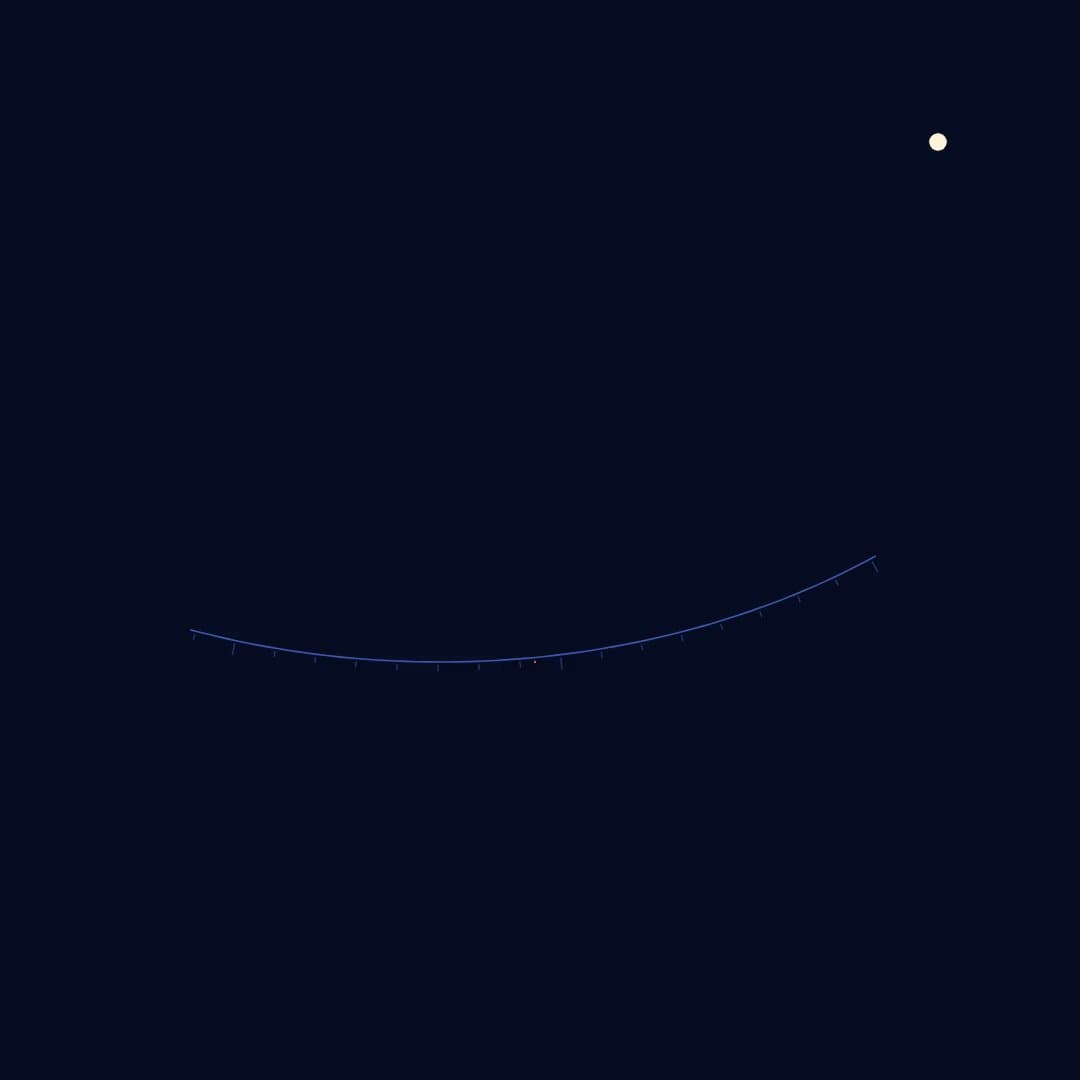
VIDEO PREVIEW
视频预览
PROMPT
Create a 20.00-second kinetic typography film titled “ESCAPE THE ORBIT,” based on John F. Kennedy’s Rice University address, September 12, 1962. The central experience: a sentence discovers that it can change its own trajectory. Deliver one complete, self-contained HTML file. Composition: 1080×1080. Target: 60fps. Use Canvas, SVG, or embedded WebGL. Embed required assets and libraries. The film must work without audio. EXACT DISPLAY TEXT
“We choose to go to the moon”
“[…]”
“not because they are easy,”
“but because they are hard”
Preserve this order. The bracketed ellipsis explicitly indicates omitted speech. Attribution is separate from the excerpt. No additional slogans.
ART DIRECTION
Background: midnight # 080D23.
Primary type: warm white # FFF4DD.
Trajectory: electric coral # FF654F.
Secondary orbital geometry: blue # 6685FF.
Use a broad, confident grotesque for the speech and a sharply drawn italic for the final emphatic word. Avoid the appearance of a spacecraft dashboard. No rockets, astronaut illustrations, starfield wallpaper, lens flares, or decorative telemetry.
The frame should resemble an exceptionally refined astronomical instrument that has become expressive. CENTRAL VISUAL RULE
The baseline of the sentence is a trajectory. At first it is trapped in a closed orbit. A rhetorical decision changes that orbit into an open path. The letters remain the same travelers throughout.
Use an abstract orbital metaphor; do not present invented mission data or imply a physically accurate flight simulation.
STORYBOARD
0.00–3.50
The opening excerpt appears across the center, large and horizontal. Reveal it in three meaningful phrase groups.
A single hairline ellipse passes behind the baseline. A small circular lunar mark occupies its distant focus.
Hold the completed phrase motionless for 700ms. 3.50–6.00
The camera pulls back. The previously straight baseline reveals a shallow curvature. The phrase travels along the ellipse as a coherent unit. Keep its glyphs upright during the initial movement. Only after the reading hold may they progressively adopt the tangent of the path. The viewer realizes the sentence is circling rather than advancing.
6.00–7.00
Show the bracketed omission in an uncluttered central opening. The orbital movement decelerates. 7.00–10.50
Reveal the next clause on the near side of the orbit. Its final word travels through one smooth, effortless arc and returns toward where it started. This ease should feel elegant but unproductive. Avoid comic bouncing. 10.50–14.50
Reveal the final clause horizontally before transforming it.
At its emphasis, the ellipse opens at one precise point. The same tracked letter group takes the new tangent and departs.
Perform one deliberate 70-degree camera roll. Counter-rotate the active phrase so it remains readable while the orbital field changes orientation around it. The trajectory sweeps from lower left to upper right. Acceleration is conveyed by expanding spacing between its trailing marks, not by shaking the camera. 14.50–17.00
The camera matches the departing phrase’s velocity. The phrase becomes visually still while the old orbit recedes beneath it. The lunar mark enlarges into a restrained crescent through geometric overlap. The crescent brackets the destination without becoming a cartoon illustration.
17.00–20.00
Resolve into a spacious editorial composition containing the selected excerpt in reading order, including its omission marker. The open trajectory runs through the margins and exits the frame. Hold the entire image completely still for the final 1.2 seconds. CHOREOGRAPHY
Use only three camera operations: pullback, roll, velocity match.
Give each operation a rhetorical purpose.
Keep the currently read phrase at least 64px high in the 1080px composition.
Motion blur may affect trailing geometry, never the active text.
No word may begin its ornamental travel before its reading hold finishes. IMPLEMENTATION
Represent the ellipse and departure path analytically. Blend position and tangent continuously at the departure point; no teleportation.
Use arc-length sampling for consistent spacing along curves.
Separate camera transforms from glyph orientation.
Cache glyph rendering and static geometry.
Expose window.ready and window. seek(t). Seeking must pause playback and render any time from 0 through 20 deterministically, including out-of-order calls.
Provide window.frame(n) for n=0…1199 at t=n/60.
Render t=20 as the final held composition.
Use no accumulated physics or runtime randomness. QUALITY GATE
Inspect frames at 0, 3, 5, 7.5, 10.5, 13, 16, and 19 seconds.
Verify that the same tracked phrase visibly follows its own trajectory.